-
The Whole in Part
Mari Andrews -
The Whole in Part draws on the hermetic axiom “as above, so below,” the ancient idea that the macrocosm is reflected in the microcosm, and that the universe, in all its vastness, is legible in the smallest of its parts. It follows that the small does not merely resemble the large, but contains it; that a single form can be a model, an echo, a container, and an entire world.
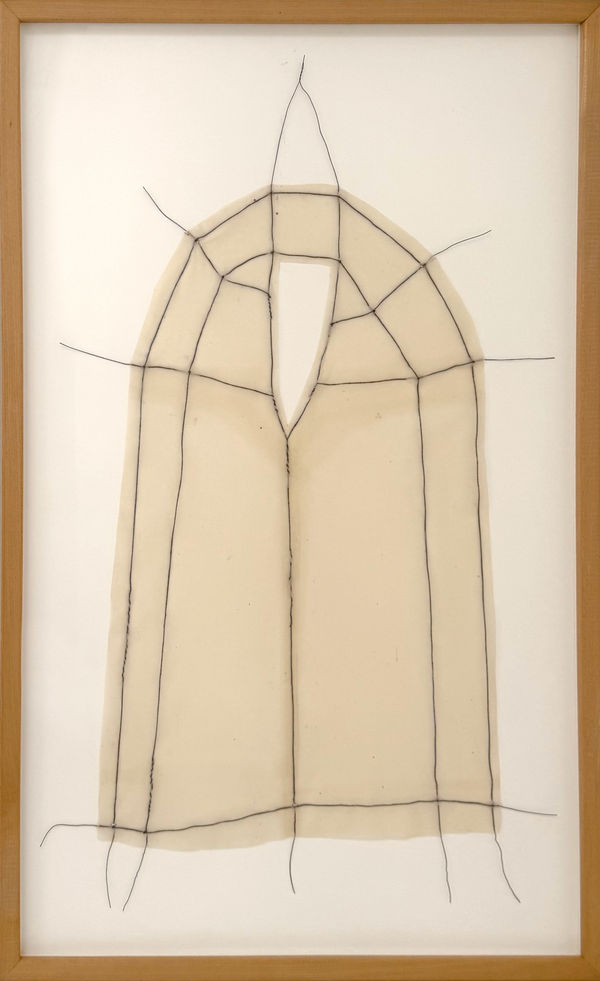
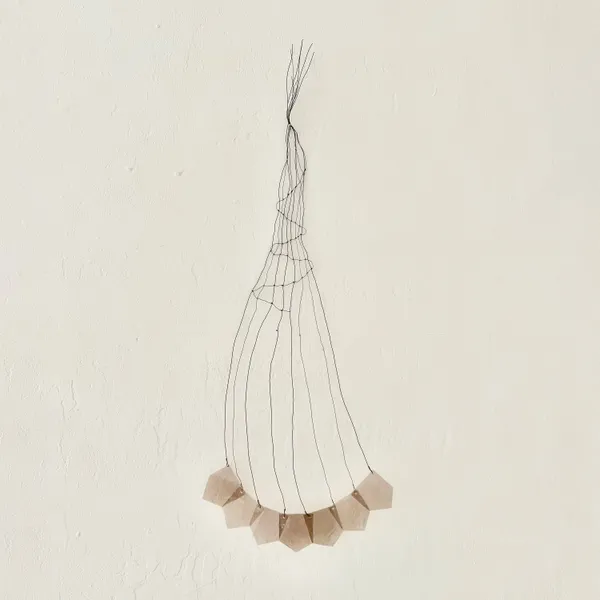
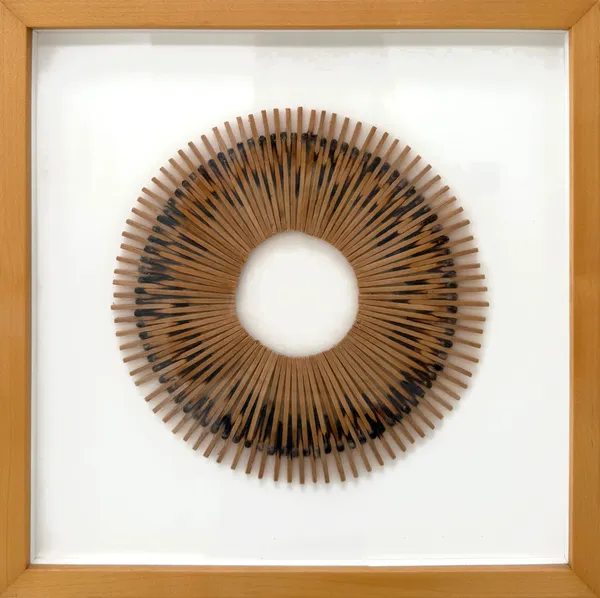
This logic of correspondence is at the core of Mari Andrews’ multi-faceted practice. Working across decades, she has built a body of work rooted in the intuitive and the elemental. Her sculptures, which she calls “three-dimensional drawings,” are constructed from seeds, leaves, moss, stones, metal wire, lead sheets, gampi paper, and mica. Many of these materials have been gathered on walks through the San Francisco Bay Area and the Sierras over the last four decades. The act of collecting is itself part of the work: a way of reading the landscape closely, and of mapping the world in miniature. In these handfuls of materials, Andrews finds the broader natural orders from which those elements come. A seed carries within it the logic of a forest; a stone holds the memory of being shaped by a river. Andrews’ sculptures honor this compression, presenting small forms that function as models, intimate in scale and expansive in implication. In her hands, they become both objects and propositions.
-
-

-
Alongside these organic materials, Andrews incorporates the visual language, and at times the physical presence, of tools and instruments of measurement: compasses, gauges, rulers, and devices for reckoning time, distance, and direction. These are our human attempts to orient ourselves within systems far larger than we can fully perceive: to locate the self within space, within time, within nature. Set against mica and moss and wire, her work speaks to the same impulse that animates the exhibition’s title: the desire to find correspondence between what is immediate and what is vast, and to hold the macro within the micro. A small gesture, Andrews suggests, can reflect a larger pattern; the act of arranging a few gathered objects is not so different, in kind, from the forces that shape a hillside, or a constellation. In Andrews’ hands, the small and the vast are always, quietly, in conversation.
-
-
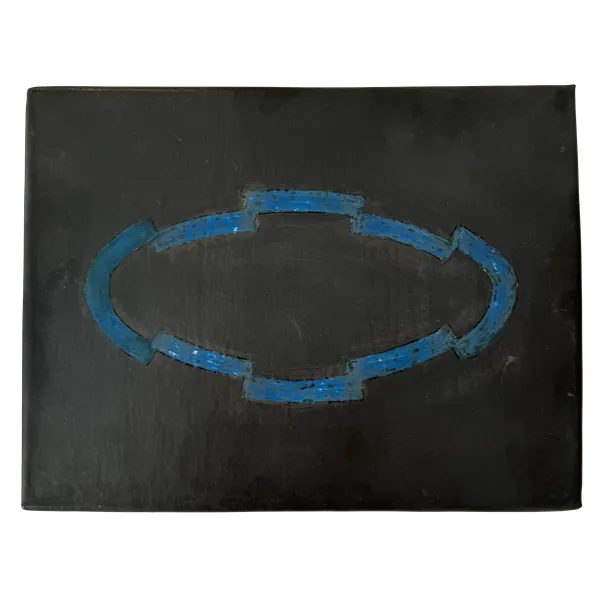
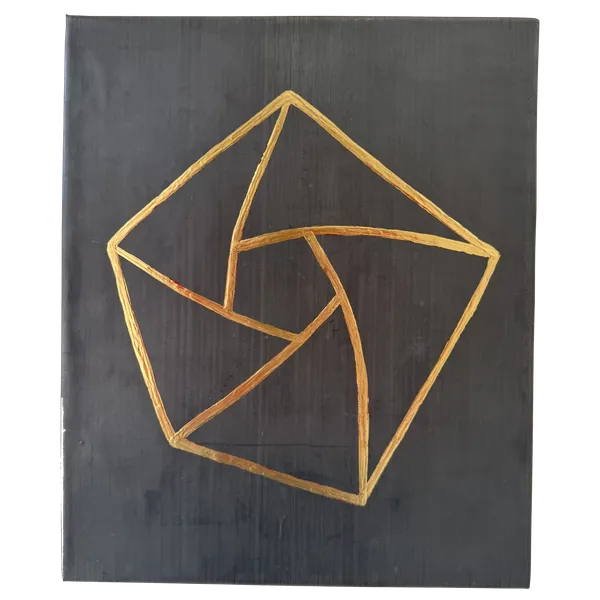
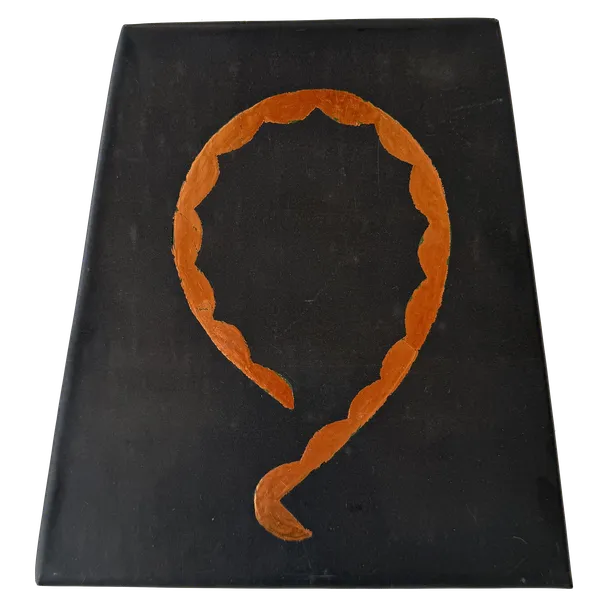
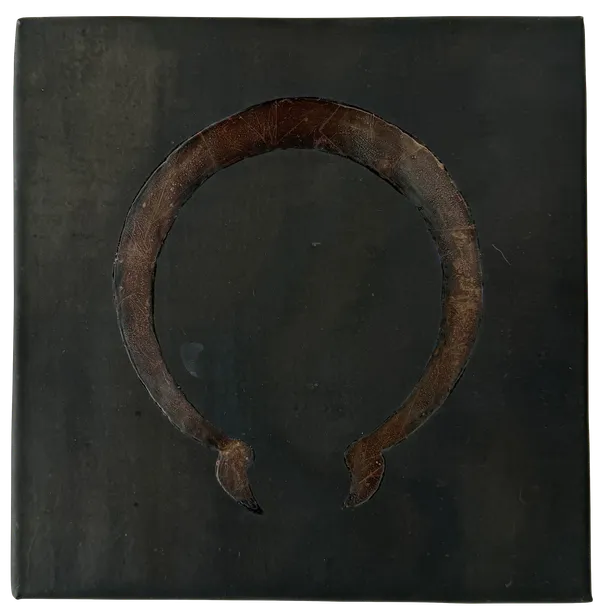
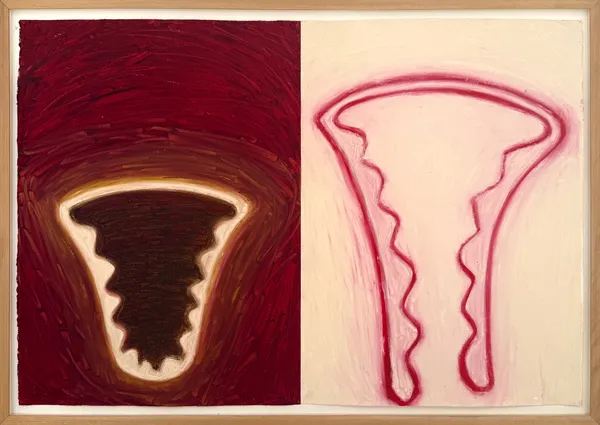
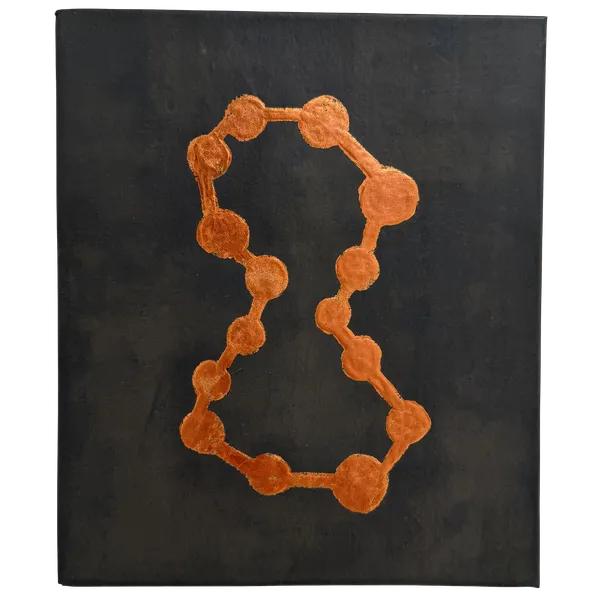
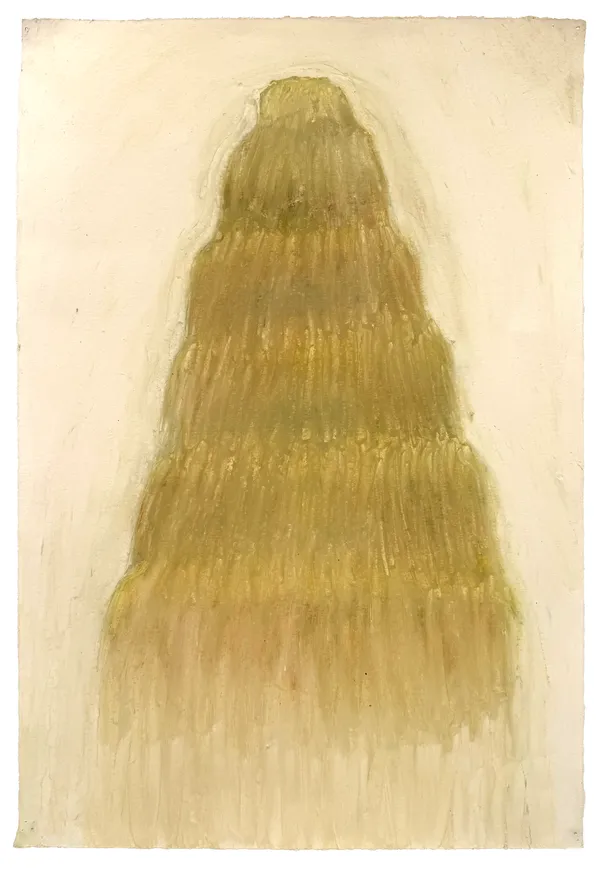
The Whole in Part traces these concerns across time. The oil stick drawings from the 1990s offer a window into the deep roots of Andrews’ visual thinking, evidence that her pared-down sensibility and her attunement to material, line, and space have long been central to her practice. In these works, looping forms, layered gestures, and translucent surfaces suggest structures that are both fixed and in flux, mapping space while resisting stable orientation. Set alongside her more recent sculpture and prints, they illuminate a sustained inquiry into what is essential, and what the essential has to say.
-
-
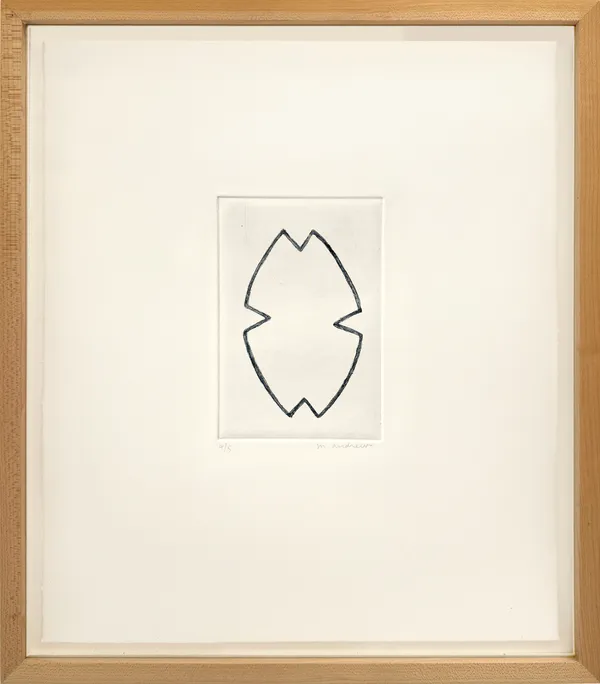
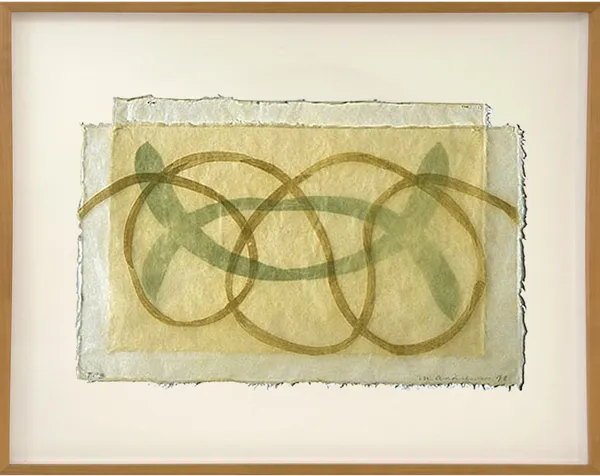
Purling, Plexus and Imbricate are three artist print editions were created by Mari Andrews in 1998 in collaboration with Paulson Fontaine Press. These impressions are artist’s proofs (APs) and represent the final available works from the edition of 35, extending key ideas from her sculptural and installation practice into printmaking.
For each print Andrews made softground drawings on separate pieces of Japanese Hosho paper. The edges were torn while the paper was still wet, leaving a rough deckled edge. Each page was then coated in beeswax, which is a common material in her work, giving the paper an ethereal translucence. To create the dimensional effect of her sculptures, Andrews layered the coated pages and delicately sewed them together so that the pages hang free within a frame. The shapes and forms register one over another as you look through the semi-transparent layers.
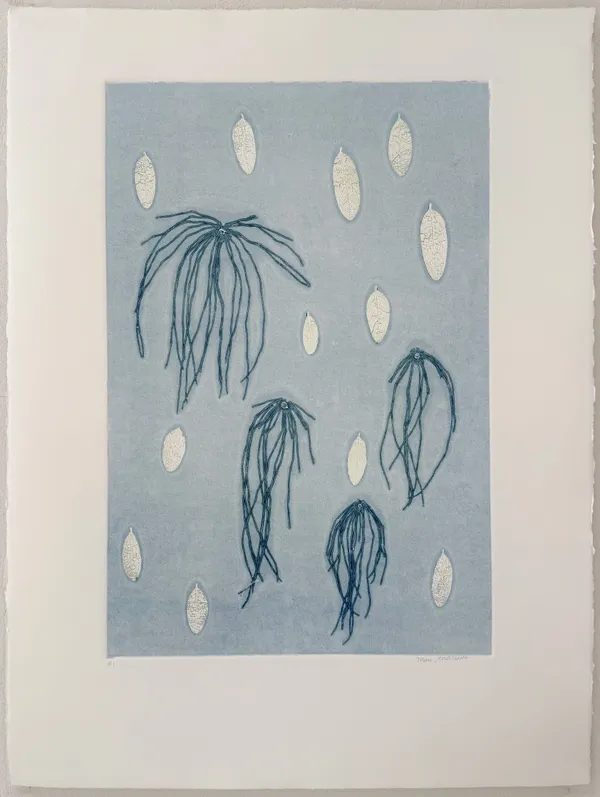
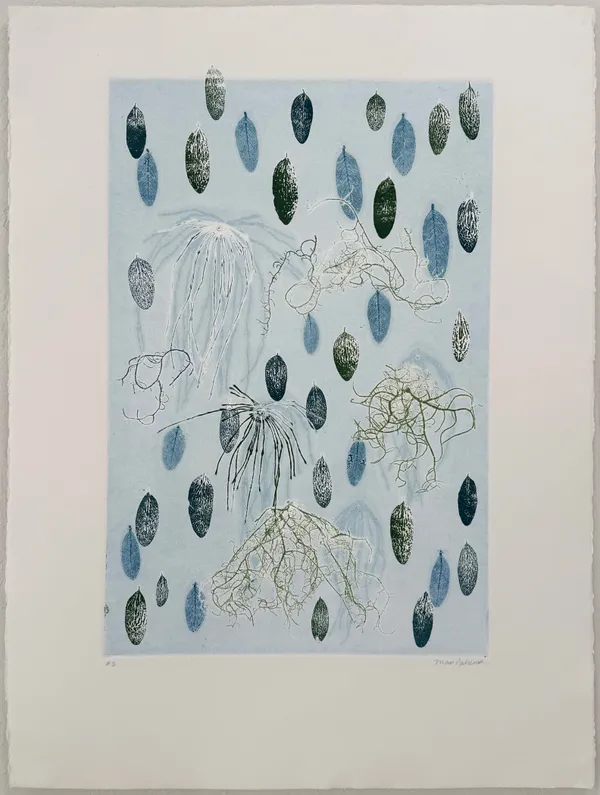
In this series of prints, Andrews extends many of the ideas behind her sculpture and installation pieces particularly that of “drawing with found lines.” The prints are made of lines that overlap and intertwine to create lacey, organic knot shapes. Andrews made the shapes by pressing natural and found materials, such as Eucalyptus leaves, torn paper and steel wool, into a waxy softground coating on the printing plates. The ground allows the resulting marks to replicate the subtle details of the materials and to convey the essence of her abstracted natural patterns.
Andrews interest in other complex patterns such as Celtic knots is most evident in Plexus, where the shape becomes an organic hybrid that recurs throughout the series. The earthy browns, reds and greens in this and the other prints, are taken directly from nature and actual objects such as leaves, soil and sand samples, rocks and lichen. In Purling, whose title refers to the curling action of water as it eddies, three layered vertical pages create intricate curving lines, a form that beautifully captures the essence of water s swirling motion. Another print, Imbricate, alludes to the act of overlapping in a layering way, similar to lying roofing tiles. In all of the work, she refers back to her practice of bringing together singular objects in making larger, interwoven pieces that reveal her unique view of the natural world. Andrews credits years of drawing on paper as the impetus for this series of etchings.
-
-
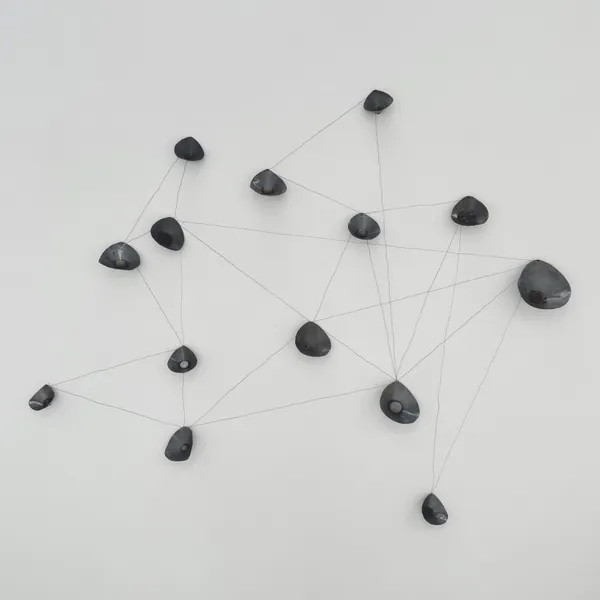
Mari Andrew’s A Very Small Array is inspired by The Very Large Array, a network of 27 radio telescopes, massive dish antennas spread in New Mexico. These telescopes are spread across the desert that work together to detect faint radio waves from deep space. By combining their signals, they “listen” to the universe, translating invisible frequencies into information. In A Very Small Array, Andrews brings that idea down to a smaller, more human scale. Her conical lead forms, each with a river-turned stone or seed pod within, echo these receivers. When arranged and connected by steel wire, these objects suggest a field of listening and relation: signals passing between forms, vibrations moving through space, contributing to some larger, imperceptible conversation, only distinguishable through their collaboration.
-
-
Andrews’ practice consistently invites the viewer to slow down and look more closely. In encountering one of her works, one finds something self-contained and whole, a world with its own gravity, coherence, and internal logic. There is a particular pleasure of recognition: the feeling of encountering something familiar made newly strange, or something strange made suddenly legible. The elemental forms Andrews works with can be so basic as to seem pre-verbal, belonging to a shared visual grammar we carry without quite knowing it. She draws on this grammar fluently, and her titles deepen the effect. Playful, spare, and intuitively resonant, they do not so much name the works as rhyme with them, nudging the viewer toward their own associative leaps. A title arrives like a small recognition: of course!
Mari Andrews earned her BFA from the University of Dayton, Ohio, where she studied art and sociology. Traveling west, she completed her MFA at Otis Art Institute in Los Angeles. She has been awarded an NEA Fellowship and several residencies including Djerassi Resident Artist Program in Woodside CA, the Cold Press north of London, the Lucid Art Foundation, and most recently the James Castle House Residency. Her work can be found in the collections of the de Young Museum of Art, San Jose Museum of Art, the de Saisset Museum in Santa Clara, CA, and the Eli Broad Foundation, and in private and corporate collections in the US and abroad. Andrews has exhibited extensively throughout California and the US, including the San Jose Institute of Contemporary Art, The Bolinas Museum, The Los Gatos Museum, the De Saisset Museum, The Monterey Museum of Art, Southern Exposure in San Francisco, and the Tucson Museum of Art and the Sun Valley Museum of Art. Internationally, she has exhibited in Japan, Israel, and England. Andrews lives and works in the Bay Area.
-
Mari Andrews: The Whole in Part
Past viewing_room